Overview
Simul8 has been a player in the discrete event simulation market since 1994, building a solid reputation particularly in healthcare and manufacturing sectors. In this comprehensive 2026 review, we examine whether Simul8 still holds up against modern alternatives — and who should consider it.

First Impressions
Upon launching Simul8, you're greeted with an interface that prioritizes functionality over aesthetics. The toolbar-heavy design will feel familiar to users of legacy business software, though it lacks the modern, intuitive feel of newer simulation tools.
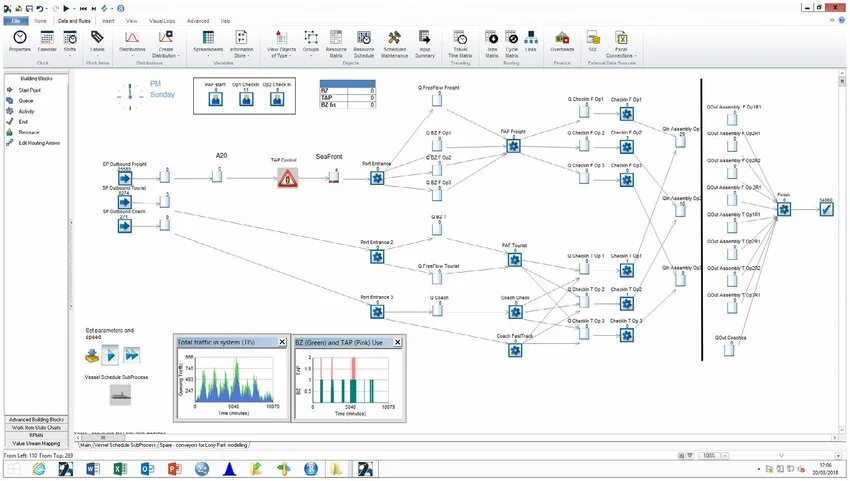 Simul8's interface showing typical simulation setup
The good news: everything you need is accessible. The learning curve is manageable, especially with their library of tutorial videos.
Core Features
Simulation Engine
Simul8's discrete event simulation engine is reliable and well-tested. It handles:
- Entity routing with multiple path options
- Resource scheduling including shifts and breaks
- Queue management with various disciplines (FIFO, priority, etc.)
- Statistical distributions for timing variability
The engine performs well for models of small to medium complexity. Larger models (1000+ entities) may experience some slowdown.
Visualization
This is where Simul8 shows its strengths. The 3D view option adds polish to presentations, and the animation during simulation runs helps stakeholders understand process flow intuitively.
Templates & Libraries
Simul8 shines in healthcare simulation with pre-built templates for:
- Emergency departments
- Outpatient clinics
- Surgical scheduling
- Patient flow
Manufacturing users get decent templates as well, though they're less comprehensive.
What's Missing: The AI Gap
Here's where Simul8 falls behind in 2026: there are no AI-assisted features.
Modern simulation software like ProcessModel now offers AI-powered capabilities that Simul8 lacks:
- Build AI — Automatic model creation from natural language descriptions
- Analyze AI — Intelligent insights and optimization recommendations generated automatically
Simul8 requires manual model building for every component. For simple models, this is fine. For complex processes, you're looking at significantly more development time compared to AI-assisted alternatives.
Competitor Comparison
| Feature | Simul8 | ProcessModel | AnyLogic | Arena | |---------|--------|--------------|----------|-------| | AI Model Building | ❌ | ✅ | ❌ | ❌ | | AI Analysis | ❌ | ✅ | ❌ | ❌ | | 3D Visualization | ✅ | ✅ | ✅ | ✅ | | Healthcare Templates | ✅ | ✅ | ⚠️ | ⚠️ | | Modern UI | ⚠️ | ✅ | ✅ | ⚠️ | | Learning Curve | Medium | Easy | Steep | Medium |
Pricing
Simul8 uses perpetual licensing with optional maintenance:
- Professional: ~$6,995 (one-time)
- Professional + Maintenance: Additional annual fee for updates
Academic discounts are available and generous.
Who Should Choose Simul8?
Simul8 is a good fit if you:
- Work primarily in healthcare simulation
- Have existing Simul8 models to maintain
- Prefer perpetual licensing over subscriptions
- Don't need AI-assisted model building
Consider alternatives if you:
- Need AI capabilities for faster model development
- Want better integration with modern analytics tools
- Prioritize modern UX/UI design
- Are starting fresh without legacy models
See Modern Simulation in Action
The Verdict
Simul8 remains a capable discrete event simulation tool with particular strengths in healthcare. However, in 2026, it's showing its age. The lack of AI features means more manual work, and the interface feels dated compared to modern alternatives.
Rating: 8.0/10
For organizations already invested in Simul8, it remains a solid choice. But for new adopters or those seeking cutting-edge capabilities, ProcessModel offers a more modern approach with AI-powered model building and analysis — features that can dramatically reduce development time and improve insight quality.
Other Competitors in This Space
Looking at alternatives? Here are the major players in discrete event simulation:
- ProcessModel ⭐ — AI-powered simulation with Build AI and Analyze AI features
- AnyLogic — Multi-method simulation (DES, agent-based, system dynamics)
- Arena — Enterprise-grade simulation from Rockwell Automation
- FlexSim — 3D simulation with strong manufacturing focus
- ProModel — Healthcare and manufacturing simulation
Looking for a simulation tool with built-in AI? Explore ProcessModel →